
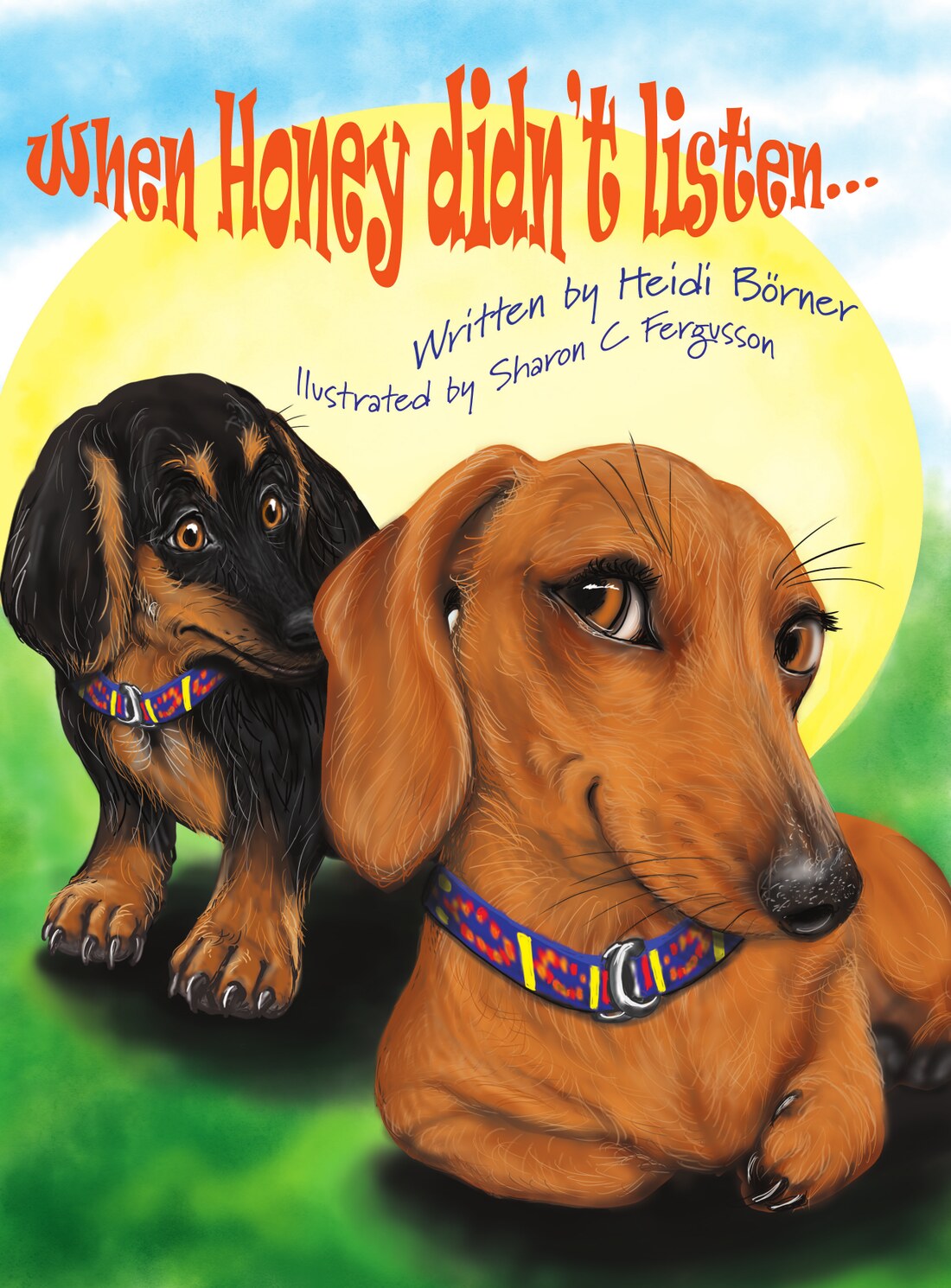
When Honey Didn’t Listen
A heartfelt story about friendship, love, learning, and second chances — inspired by a true story.
Written by Heidi Börner · Illustrated by Sharon C Fergusson
Children’s book about driveway safety — from Curious Roots Books, part of the Orange Umbrella family.
Now available on Amazon.com; Amazon.ca; and Amazon.com.au !
Curious Roots Books
About the book
Honey loves adventures. Phoebe loves Honey. But one day, Honey makes a choice that changes everything.
Inspired by a true story, When Honey Didn’t Listen is a heartfelt story about friendship, love, learning, and second chances.
Because helping children learn starts with stories they understand, Honey and Phoebe are very happy their story is being shared.
By following Honey and Phoebe’s journey, children discover why safety rules around cars matter. Then, with help from parents, teachers and caregivers using the guide that follows at the end, they learn even more about staying safe.
DRIVEWAY SAFETY
Why this story matters
Every year, children and pets are injured in preventable driveway and road accidents. Young children are still learning how to judge danger, speed, distance, and risk, which is why they rely on the adults who care for them to help keep them safe.
When Honey Didn’t Listen is a gentle and engaging story about friendship, love, learning, and second chances. Through the experiences of two much-loved dachshunds, Honey and Phoebe, children discover why safety rules around cars matter, while parents and caregivers are encouraged to think about how they can create safer places for children to play, explore, and grow.
The book is founded on a simple belief: helping children stay safe starts with stories they understand.
2 weeks
A child is hospitalised in New Zealand about every two weeks after being injured by a car in a private driveway.
5 a year
Around five children are killed each year in New Zealand driveway run-over incidents.
Age 2
Most children injured in driveway incidents are toddlers, aged about two.
ABOUT THE AUTHOR
Heidi Börner

Heidi Börner lives in New Zealand and loves stories, nature, and the ocean. As an Occupational Health Nurse Specialist, she worked in many different workplaces and communities across Canada and New Zealand. She supported workplaces so that parents could return home to their kids healthy and safe after work.
Inspired by the true story of Honey and Phoebe, When Honey Didn’t Listen is her first children’s book.
Heidi believes children learn about the world through stories and experiences. She hopes Honey and Phoebe’s story will help families start important conversations, create safe places to play, and enjoy learning together.
FOR PARENTS, TEACHERS AND CAREGIVERS
Parent and Caregiver Guide
Honey’s story is about more than listening — it’s about how children learn about the world. The Parent and Caregiver Guide offers simple questions and ideas to keep the conversation going before, during and after reading Honey’s story together.
The book includes a Parent and Caregiver Guide, family activities, discussion prompts, practical safety resources, and teacher extension materials that encourage learning beyond the final page. Honey and Phoebe hope their story helps start conversations, inspires good habits, and creates safer places for children and pets to learn, play, and enjoy life’s adventures.
KEEPING KIDS AND PETS SAFE
Road Safety Tips and Resources
Practical tips and trusted resources for creating safer places for children and pets around vehicles — at home, on the street, and on the way to school.
Develop a plan for your home
Loading and unloading kids and pets into and out of vehicles at home can be a challenge — busy roads, a long driveway, or a tight garage or parking space to name a few.
Wherever you live, think about and set up safe spots that are safe for kids and pets to sit and wait.
If you have to back your car out of a tight garage space:
- Make sure your kids and pets are in the designated safe spot.
- Before moving the car, check around the car for other kids, toys and pets.
If you have to unload kids and pets before driving into the garage:
- Leave the car outside the garage and get the kids and pets into the home.
- Or, put them in their safe spot and proceed into the garage.
Pick safe spots for kids to play that are separate from driveways, parking areas, and roads. Playing on the driveway entices kids to be in the wrong place at the wrong time. Fencing is helpful to create safe playing areas for kids and pets.
Check, supervise, and separate play from driveways
Check before moving. Walk around the vehicle and know where children and pets are before driving off.
Supervise around vehicles. Young children need active adult supervision around driveways, car parks and roads.
Separate play from driveways. KidsHealth NZ highlights three key actions: check for children, supervise children, and separate play areas from driveways.
Backup cameras: how useful are they?
Backup cameras are helpful. A rearview camera gives the driver a live video feed of the area behind the car, greatly shrinking the blind spot. This means you can see much more than with mirrors alone, potentially spotting a child, pet, or obstacle that you’d otherwise miss.
The camera is only as good as the person watching it. If a driver is distracted or looking at the wrong thing, they may miss a child. Cameras can have blind spots, especially in small areas right below the bumper or at the sides. A young child or pet sitting or standing immediately behind the car could be in a camera’s “blind spot” depending on the vehicle. Glare from the sun, a dirty lens, or poor lighting can also obscure the camera’s image.
Always double-check in person. You should still walk around your vehicle and check mirrors before reversing. Think of the camera as an extra aid, not a replacement for your own eyes. If your car has backup sensors that beep, use them as another helpful tool, but continue to be vigilant. Technology greatly improves safety, but nothing replaces an alert driver and good habits.
Habits to avoid back-over tragedies:
- Always know where your kids are before you start the car.
- Teach children that if a car engine is on or the white reverse lights are lit, they should stay far away.
- Keep the camera lens clean for a clear view.
- Back up slowly, ready to brake.
- Supervise young children around vehicles. Take their hand in parking lots and driveways.
Pros:
- Improves the driver’s view behind the vehicle.
- Can reveal children, pets, toys or obstacles that mirrors may miss.
- Helps when reversing from tight spaces or driveways.
Limitations:
- Drivers still need to look, move slowly and check surroundings.
- Dirty lenses, glare, darkness or delay can reduce visibility.
- Cameras may not show every side angle or fast-moving child.
Best practice:
- Walk around the vehicle before moving.
- Know where children and pets are.
- Use mirrors, camera, direct sight and slow speed together.
(Source: Insurance Institute for Highway Safety)
When can children judge speed and distance?
Young children are not small adults — they have trouble judging how fast a vehicle is coming or how far away it is. In general, most kids under 10 years old cannot accurately gauge the speed or distance of oncoming cars. This means a younger child might think they have plenty of time to cross the road when a car is very close. (safekids.org)
The ability to estimate speed and distance improves with age and practice. Around 10 years old, children’s brains and eyes have developed enough to judge car speeds better (every child is different, but around ten is a common guideline). Even then, kids should be very cautious — they’re just beginning to develop this skill.
Early teenagers (around 12–14 years old) get much more reliable at gauging traffic. One research study using a realistic road simulation found that by age 14, kids could time crossings as well as adults, whereas even 12-year-olds still had occasional difficulty and compensated by choosing bigger gaps in traffic. Younger children (ages 6, 8, 10) often misjudged and would have been struck by a car in some trials, while 14-year-olds had no such incidents. (University of Iowa)
Bottom line: because kids under 10 can’t reliably judge vehicle speed and distance, they should always be supervised near roads and driveways. Even older kids benefit from guidance. Teach children to be patient and never dash out. They should wait for very large gaps in traffic — larger than an adult might wait for — if they need to cross, to give themselves plenty of time. Recognising that judging car speed is hard for kids, parents and caregivers can take extra steps to keep them safe such as crossing at crosswalks, holding hands, and setting strict rules about not crossing without an adult for younger ones.
The easiest thing to do is to hold your child’s hand when crossing roads or in parking lots.
Starting a “walking school bus” in your neighbourhood
What is a walking school bus? It’s a group of children walking to school with one or more trusted adults leading the way — like a carpool, but on foot. The group follows a set route and picks up “passengers” (other kids) along the way. It’s a fun, safe, and healthy way for kids to get to school.
How to start one: You can begin informally and grow it over time. First, invite families who live nearby to join the walk — chances are, other parents will be excited to have their kids participate. Next, pick a safe route and take a test walk without the kids, just with adults, to estimate the travel time and note any hazards (like a tricky crossing or lack of sidewalks). Make adjustments as needed to choose the safest path.
Set a schedule and roles: Decide how often the group will walk together — it could be every school day or just once or twice a week to start with. Pick a meet-up time and location. Identify who the adult “bus drivers” will be; often parents can take turns on different days. It’s good to have at least one adult for every 5–6 kids (or more adults for younger children). Consistency helps, so everyone knows that, say, every Wednesday at 8:00 AM the walking school bus departs from the big tree on Maple Street.
Safety first: Treat the walking school bus like you would an actual school bus in terms of safety. Establish simple rules with the kids — for example, stay on the sidewalk, cross at corners with the adult, and keep to the route. Wear bright colours or reflective gear if possible. An adult should lead from the front, and if possible, another adult can “tail” at the back of the group to keep an eye on everyone.
Make it fun! Give your walking group a fun name, sing songs or play “I Spy” on the way to school, and celebrate milestones (like a special healthy treat after the 50th walk). The key is to have fun and make walking to school enjoyable, so kids look forward to it. Not only do children get exercise and social time, they also learn road safety skills in a real-world setting. Parents and caregivers get to build community connections, and everyone starts the day with a smile and fresh air. A walking school bus is a win-win for safety, health, and neighbourhood spirit!
When picking a route consider:
- Do you have room to walk on foot paths? How much traffic is there?
- Is it easy to cross the street?
- How do drivers behave — are they speeding? Do they stop for walkers?
- Is the environment safe — are there roaming dogs or criminal activity?
- Will the walking school bus operate before school, after school or both?
(Resource: walkingschoolbus.org)
Kids and pets overheat fast in cars
You might think, “I’ll just be a minute” — but even a quick errand can turn dangerous when a child or pet is left inside a parked car.
Cars heat up fast — even on cool days:
- On a warm day, the temperature inside a car can climb 20°C in just 10 minutes — even with the windows cracked.
- On a 21°C (70°F) day, the inside of your car can reach over 40°C (104°F) in under 30 minutes.
- That’s like sitting in a hot oven. It can cause heatstroke, organ failure, or even death.
Why it’s so risky for kids and pets:
- Children’s bodies heat up 3 to 5 times faster than an adult’s.
- Dogs and cats can’t sweat like humans. They cool themselves mostly by panting, which doesn’t work well in a hot, closed car.
- Young children and pets can quickly become confused, sleepy, or unconscious — without being able to open a door or call for help.
Never leave them in the car:
- Even for “just a minute.” It’s never safe, even in the shade or with windows open.
- Leave the car running with air conditioning? Not safe either — cars can shut off or be stolen.
- If you see a child or pet alone in a car, call emergency services immediately.
Easy habits to stay safe:
- Keep your bag, phone or wallet in the back seat — so you always check before leaving the car.
- Teach older kids: never play in parked cars and never leave a younger child or pet inside alone.
- Use a reminder note on the dashboard, or set a phone alert when driving with little passengers.
A life-saving rule: if they can’t get out on their own, don’t leave them behind.
Even loving, careful families can make a mistake — so build safe habits that protect the people (and pets!) you love most.
Helpful resources, links and videos
Safe Kids Worldwide — a global nonprofit with 30 country members dedicated to preventing childhood injuries, with practical safety tips for in and around cars, pedestrian safety, and more.
Kids and Car Safety (KidsAndCars.org) — a U.S.-based organisation devoted to saving the lives of children (and even pets) in and around vehicles, with information on preventing backovers, “frontovers”, hot car incidents, and other vehicle-related accidents involving kids.
National Highway Traffic Safety Administration (NHTSA) — the U.S. government agency for road safety, used internationally. NHTSA publishes guides for parents on car seat installation, vehicular heatstroke prevention, and tips like always walking around your car to check for kids before backing up.
Safekids Aotearoa (New Zealand) — a child safety advocacy group in NZ providing resources and campaigns on child injury prevention. They emphasise “Check for me before you turn the key”, encouraging drivers to walk around the car and ensure no children are behind it before reversing, with tips specific to driveway safety, pedestrian safety, and more.
More reading:
- KidsHealth NZ — Driveway Injury Prevention
- Kāinga Ora — Keeping your children safe on driveways
- Healthpoint — Safekids Aotearoa
- Congiu et al. — Child pedestrians: factors associated with ability to cross roads safely
- Schwebel, D.C. — Children’s Ability to Estimate Approaching Vehicle Time-to-Arrival
- Kidd & Brethwaite — Visibility of children behind 2010–2013 model year passenger vehicles using glances, mirrors, and backup cameras
- Kids and Car Safety — What You Need to Know About Backup Cameras
- NHTSA — Child Heatstroke Prevention
- American Veterinary Medical Association — Pet safety in vehicles
Videos:
Let’s Talk
If your group (such as community group, business, child care group, school, daycare, family, neighbourhood, injury prevention agency, library, hospital etc) would like to distribute copies of the book to families and caregivers, please do contact me. I would love for When Honey Didn’t Listen to support safety campaigns and to reach as many people as possible to help prevent further tragedies and keep our next generation safe and happy!
Please contact me at my email: curiousrootsbooks@gmail.com

When Honey Didn’t Listen is published by Curious Roots Books — Heidi’s home for stories that help children learn. First published July 2026 · ISBN 978-0-473-79339-5.